
Koochiching County Court Records After Arrest
After an arrest in Koochiching County, the custody record and the court record split into two related systems. The Koochiching County Jail page links the public roster, but the county also warns that the current status of a pending legal matter is provided through the Minnesota Court System. That warning matters because a jail row can show the booking charge while the prosecutor later files a different formal charge in district court.
The local prosecutor is the Koochiching County Attorney's Office, led by County Attorney Jeffrey Naglosky. The office reviews law-enforcement reports and files charges for county-level criminal matters when prosecution is authorized. Court records after a jail arrest then live in Koochiching County District Court, which is part of Minnesota's Ninth Judicial District. For current custody and booking fields, use the Koochiching County jail inmate records page. For booking photos, use the Koochiching County jail mugshots page.
The county prosecutor source identifies the office that reviews local arrest reports before court charges are filed:
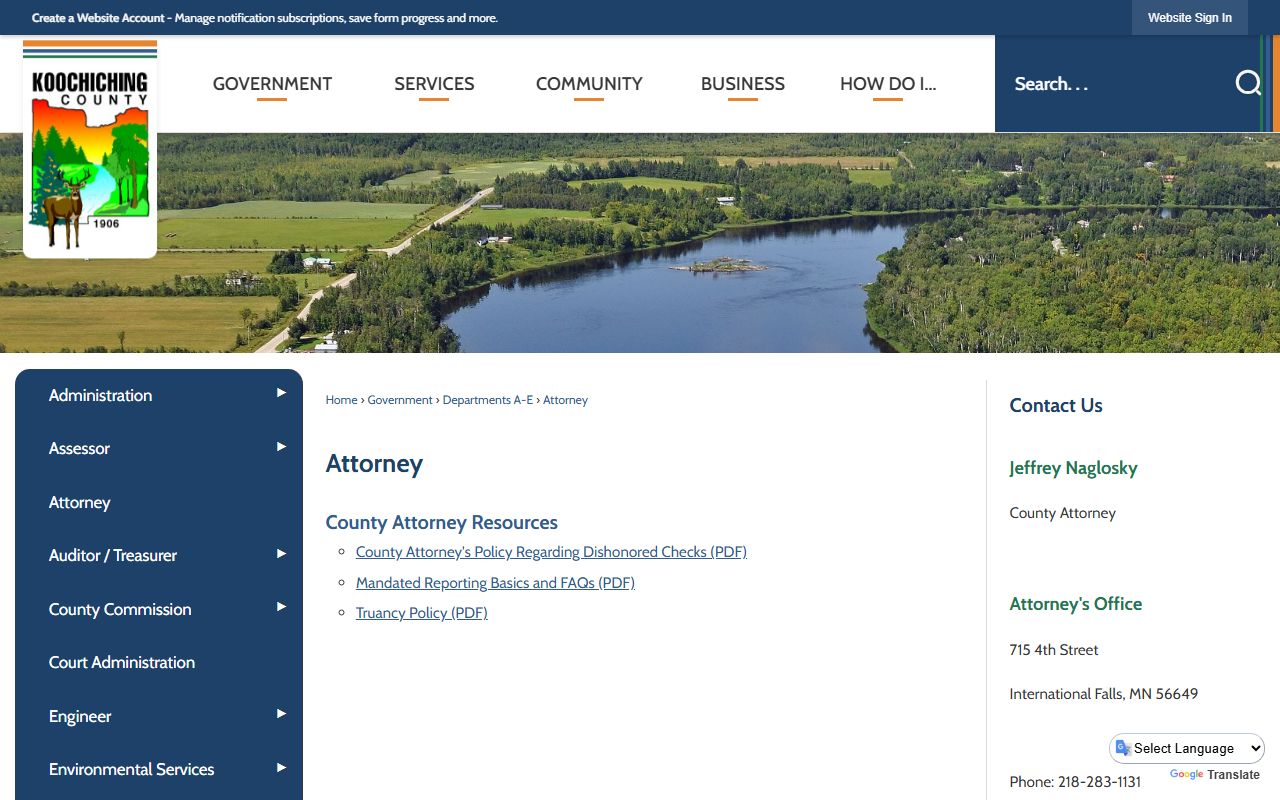
Use the prosecutor office for charging context, but use the court record for filed counts and dispositions.
The Minnesota Judicial Branch Koochiching District Court page is the local court source for criminal, traffic, juvenile, probate, family, and civil case jurisdiction. Court Administration can help with certified copies and records not fully available online. The local Court Administration phone is 218-283-1160.
The official Koochiching District Court page is the local court source for filed cases:
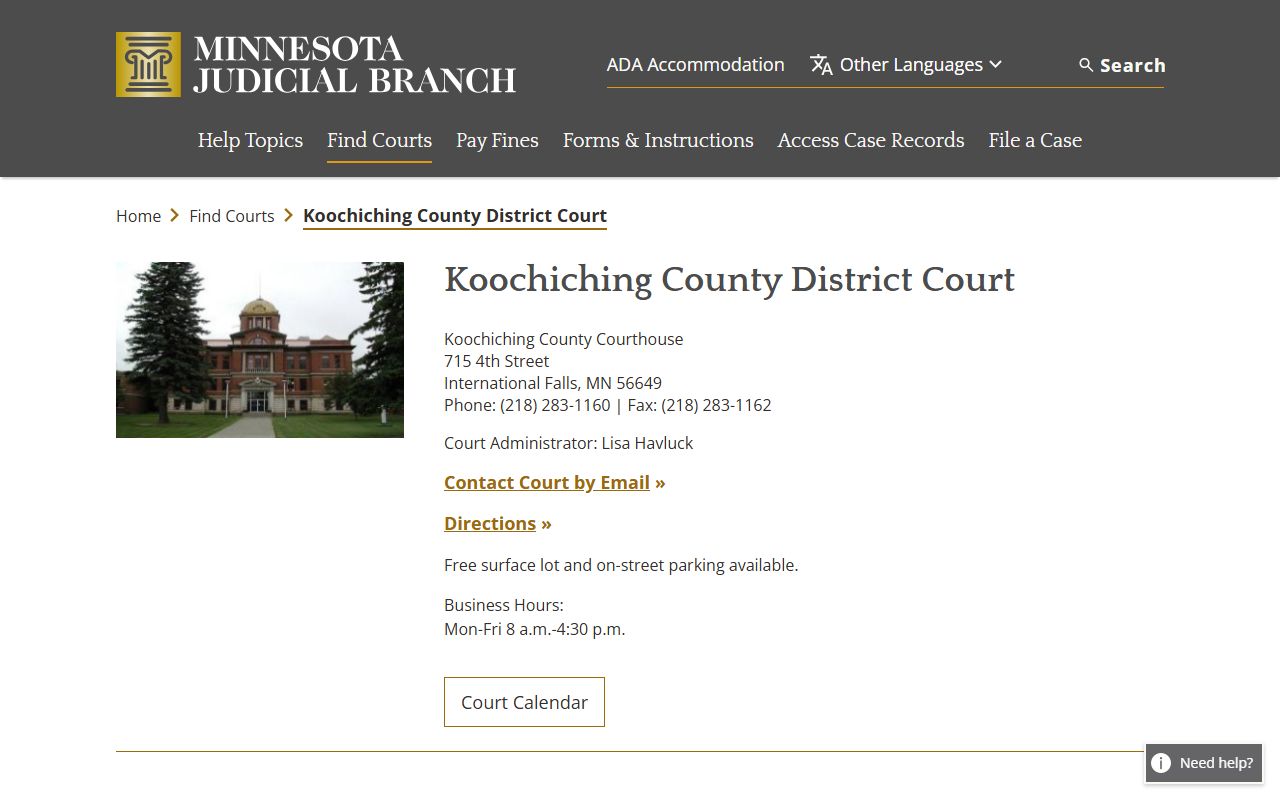
Use that court source for office context, then use MCRO for most online case lookups.
Find Koochiching County Court Records
Minnesota Court Records Online, usually called MCRO, is the main online search path for district court records after an arrest. MCRO provides access to publicly available district court case records under Minnesota court access rules, but it is not the same as a certified court record. The Judicial Branch states that certified copies come from local court administration.
MCRO also has an important name-search limit. Pending criminal, traffic, and petty misdemeanor cases with no conviction may not return in Case Search Results or Hearing Search Results when searched by defendant name. If a new Koochiching County arrest has moved to court but does not appear by name, a case number may be needed. Court Administration, the citation, the complaint, or attorney paperwork may provide that number.
| Field Label | Type | Required | Notes |
|---|---|---|---|
| Required acknowledgment | Terms acceptance | Yes | MCRO requires acceptance before search tools open. |
| Case Search | Search mode | No | Search by case number, party, attorney, citation, or business where available. |
| Hearing Search | Search mode | No | Useful for hearing dates, with name-search limits for pending cases. |
| Case Number | Text | No | Best path for pending criminal cases that do not return by name. |
| Party or Defendant Name | Text | No | May miss pending no-conviction criminal, traffic, or petty misdemeanor matters. |
| County | Filter | No | Select Koochiching if the filter is available. |
MCRO is the practical first search point for Koochiching County court records after arrest:
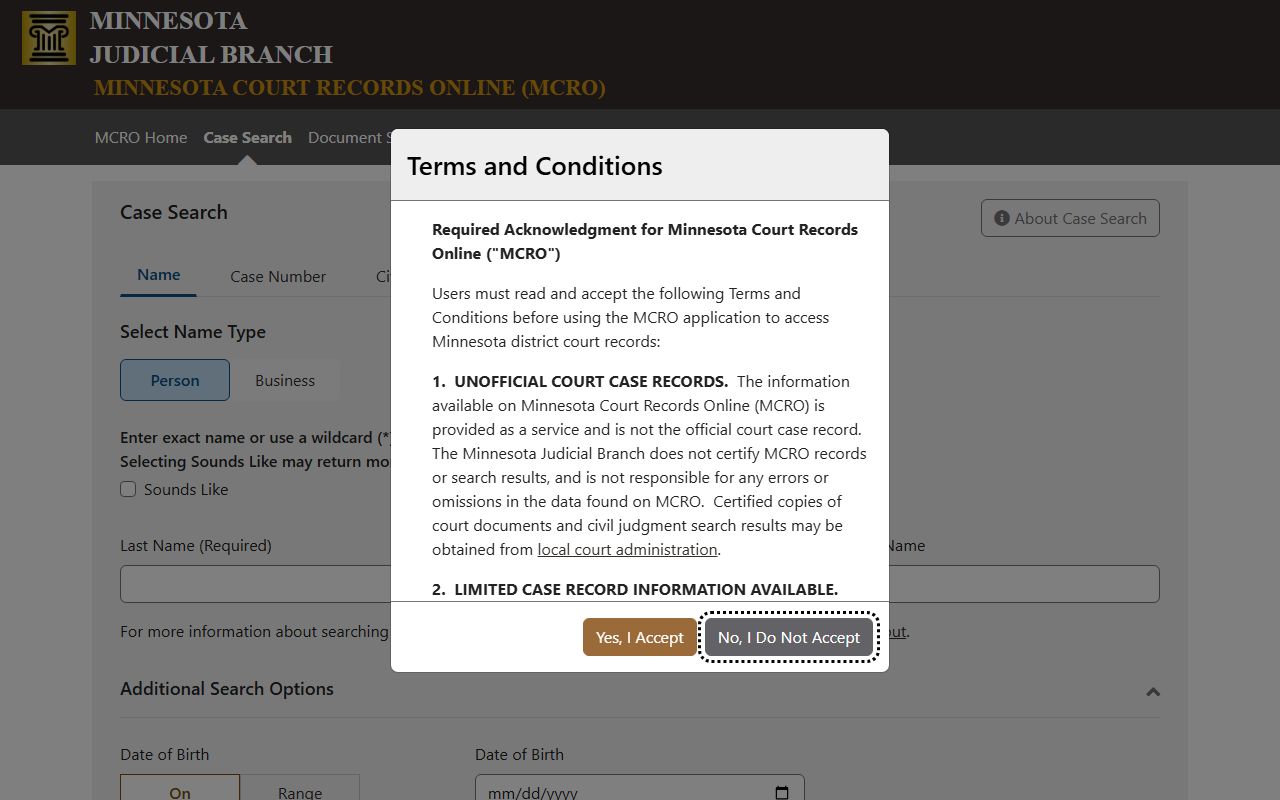
The portal can show public case records, registers of actions, hearing data, judgment information, and some documents, but courthouse terminal access may be broader than remote access.
Koochiching County Charging Documents
The arrest-to-court path usually follows a simple order: arrest, booking at the Koochiching County Jail, prosecutor review, formal charge filing, case number assignment, and court hearings. The jail roster can list statutes or plain-language charge text, but those are custody-facing entries. The filed court document controls the case in district court.
Minnesota county criminal practice commonly uses a complaint for formal charging. Other charging forms may appear in particular case types, but the user task is the same: search MCRO, check the court file, and ask Court Administration for certified or non-remote records when needed.
| Document | Who Files It | What It Does | Koochiching County Search Note |
|---|---|---|---|
| Complaint | Prosecutor | States the formal counts and supporting allegations. | Most common public charging document to look for after a local arrest. |
| Information | Prosecutor | Formal charge document used in some criminal proceedings. | Check the court case record, not only the jail roster. |
| Indictment | Grand jury | Charges serious offenses through a grand jury process. | Less common, but still tracked through the court case. |
Koochiching County Charge Status
Charge status can change many times after a jail arrest. A count may be filed, amended, dismissed, or resolved by plea or trial. A person may also be booked on a probation violation under a prior case, which means the new custody event is tied to an older conviction and sentence. That is one reason the court record should be checked before drawing conclusions from a roster charge line.
| Status | Meaning | Where to Confirm |
|---|---|---|
| Pending | The filed charge has not reached final disposition. | MCRO by case number or Court Administration. |
| Amended | The prosecutor changed the count, wording, severity, or charge set. | Register of actions and filed documents. |
| Dismissed | The charge ended without a conviction on that count. | Court disposition entry or certified copy. |
| Convicted | A guilty plea, verdict, or adjudication was entered. | Disposition and sentencing records. |
| Continued | A hearing was moved to a later date. | Hearing search or case calendar. |
| Warrant | The court ordered arrest, often for failure to appear or a violation. | Case record and Court Administration. |
Bond and Warrants After Arrest
The Koochiching County roster includes a Bail column, but the research did not locate an official public bond-posting schedule, online bond vendor, accepted payment methods, or bonding-company procedure. For current custody and release facts, call the jail at 218-283-4416. For the court order that controls release, search MCRO or call Court Administration at 218-283-1160.
Bond terms are not always solved by paying money. A person may be held on a probation violation, warrant, detainer, another agency hold, federal matter, or immigration issue. A "no-bond" or hold status means release depends on a court or another authority. The jail phone line can confirm current custody facts, but legal advice and warrant resolution should come from court records, counsel, or the court.
| Release Term | Practical Meaning | Koochiching County Note |
|---|---|---|
| Cash bail | Money is posted to secure release and appearance. | Payment methods were not published in the official jail source reviewed. |
| Conditional release | Release with rules such as no contact, testing, or travel limits. | Look at the court order, not only the roster. |
| Recognizance release | Release based on a promise to appear. | May appear only after the court acts. |
| No-bond hold | Money alone will not produce release. | Can involve warrants, probation, DOC, federal, ICE, or another county. |
Charges and Convictions
An arrest charge is not a conviction. The Koochiching County jail page says arrest does not mean guilt, and the court record is the place to confirm formal counts and final case results. A charge is an allegation. A conviction is the result of a guilty plea, verdict, or adjudication.
| Point | Charge | Conviction |
|---|---|---|
| Stage | Accusation filed or listed after arrest. | Final finding or plea of guilt. |
| Proof level | Based on probable cause or prosecutor filing standard. | Requires plea or proof beyond a reasonable doubt. |
| Can change? | Yes, it can be amended, reduced, or dismissed. | Can be appealed or later affected by expungement rules. |
| Best source | Complaint, MCRO, and Court Administration. | Disposition, sentencing entry, and certified copies. |
Sealed and Expunged Records
Minnesota expungement is governed by Minnesota Statutes chapter 609A. In practical terms, expungement is the court process used to seal eligible criminal records from public view. The research did not locate a separate Koochiching County mugshot or court-record removal policy, so sealing questions should be handled through the court case and Minnesota expungement law.
| Point | Sealed | Expunged |
|---|---|---|
| Public view | Record is hidden from ordinary public access. | Minnesota commonly uses expungement as a sealing remedy. |
| How it happens | By court rule, statute, or court order. | By petition or statutory process when eligible. |
| Agency access | Some agencies may retain limited lawful access. | Access depends on the scope of the order and law. |
| Where to start | MCRO and Court Administration. | The court file and Minnesota chapter 609A process. |
Important: Court record searches and public-record lookups are not FCRA consumer reports and should not be used for employment, tenant, credit, or insurance decisions.
Koochiching County Record Limits
Minnesota Statutes section 13.03 starts with the rule that government data are public unless classified otherwise. For law-enforcement records, section 13.82 controls arrest data and related limits. For jail and detention records, section 13.85 can make data private when release would expose medical, psychological, financial, unrelated personal information, or create safety risks.
Juvenile information is restricted, and the sheriff records page says confidential reports, juvenile names, Social Services reports, vulnerable-adult reports, victim names, active investigations, and records that could jeopardize safety may be withheld. For arrest or incident reports outside the court file, call the Sheriff's Office Civil Division at 218-283-1141 or mail a written request to the Sheriff's Office records address. For court records after a jail arrest, MCRO and Koochiching Court Administration remain the main route.